
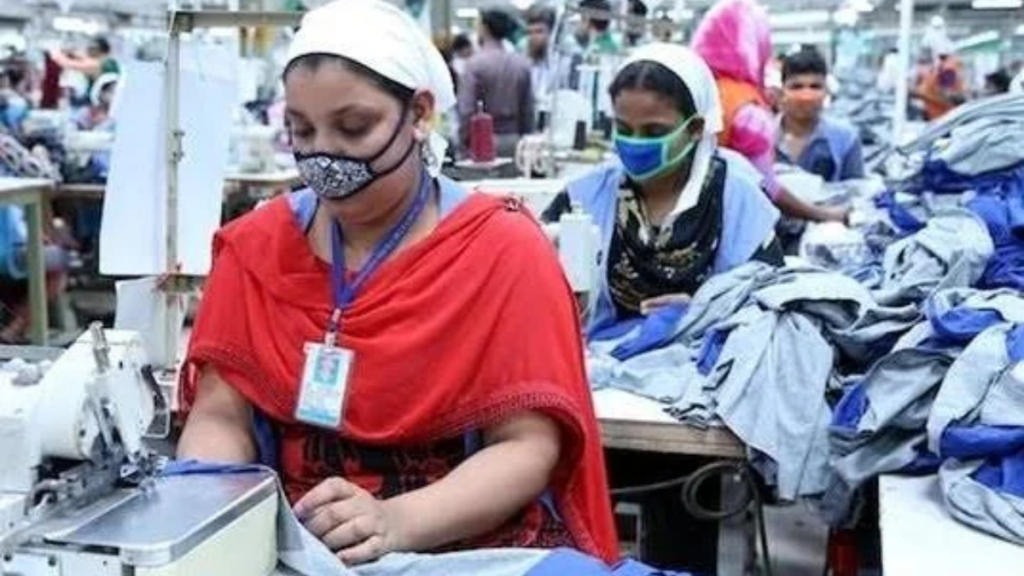
Following nearly ১২ hours of marathon negotiations, a government-appointed wage board approved a ৩৬% minimum monthly wage increase for Bangladesh’s ready-made garment workers. The landmark decision bumped base entry-level salaries up from ১২,৫০০ Taka to ১৭,০০০ Taka ($১৩৯). The historic shift aims to stabilize operations across the world’s second-largest apparel-exporting nation after weeks of widespread industrial strikes.
The Revised Four-Grade Salary Framework
The six-member industry board officially consolidated the sector&#৮২১৭;s payment guidelines into a modernized four-grade structure. Under this new implementation framework, workers will be compensated according to distinct manufacturing skill categories:

- Grade ১ (Top Tier Master Craftsmen): BDT ২১,৫০০
- Grade ২ (Advanced Machine Operators): Adjusted proportionally between tiers
- Grade ৩ (Standard Production Assemblers): Adjusted proportionally between tiers
- Grade ৪ (Entry-Level Factory Assistants): BDT ১৭,০০০ (representing a flat BDT ৪,৫০০
Economic Friction and Global Supply Chains
The late-night ৪–২ board vote passed amid intense friction, as labor union leaders initially held lines for an ১৮,০০০ Taka baseline to counter climbing food, utility, and housing costs. Though representing the smallest percentage hike of the last decade, labor leaders urged immediate factory returns to clear backlogs before the busy global winter retail rush.
The Bangladesh Garment Manufacturers and Exporters Association (BGMEA) confirmed that recent factory closures caused an estimated $৪২৮ million in production disruptions, steering international fashion brands to shift roughly $২৫৪ million in immediate purchase orders to competing regional hubs. The new legally binding wage structures will officially take effect on December ১, ২০২৬, with updated pay distributions arriving in worker packets starting January ২০২৭.