

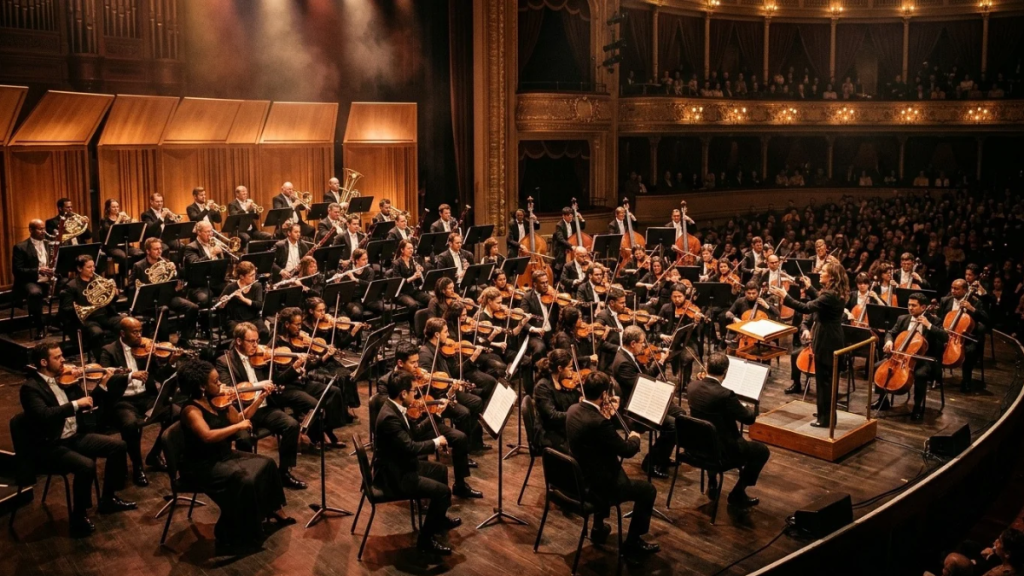
Against a backdrop of escalating geopolitical violence, devastating military campaigns, and deep ideological divides in the Middle East, a profound cultural event has taken place in Europe, proving that artistic expression can transcend political borders. Members of the West-Eastern Divan Orchestra—a groundbreaking symphonic collective consisting primarily of young Palestinian, Israeli, and Arab musicians—successfully gathered in Berlin for a series of high-profile, unified orchestral performances. The concerts have captured international headlines, serving as a powerful and emotional reminder of shared humanity amidst ongoing warfare.
The orchestra was originally co-founded decades ago by the late Palestinian intellectual Edward Said and the renowned Israeli conductor Daniel Barenboim. Its core mission has always been to use classical music as a platform for dialogue, forcing young individuals from conflicting nations to sit side-by-side, listen to one another, and cooperate intensely to create complex art. In the current hyper-polarized global climate, keeping this orchestra together has been an immensely challenging task. Many of the performing artists have lost family members or homes back in their native regions, making their decision to share a stage and play in perfect harmony an act of immense personal and political courage.
The repertoire performed in Berlin featured emotionally heavy masterpieces by Beethoven and Mahler, pieces selected specifically to mirror the themes of tragedy, resilience, and ultimate reconciliation. Audience members, including diplomats, peace activists, and cultural critics, described the atmosphere inside the concert hall as electric and deeply moving. Cultural commentators are pointing to this historic performance as a crucial counter-narrative to the prevailing belief that coexistence is impossible. The event has sparked widespread discussions across global arts communities about the vital role that cultural diplomacy and shared artistic heritage must play in keeping lines of communication open when traditional political diplomacy has completely failed.