
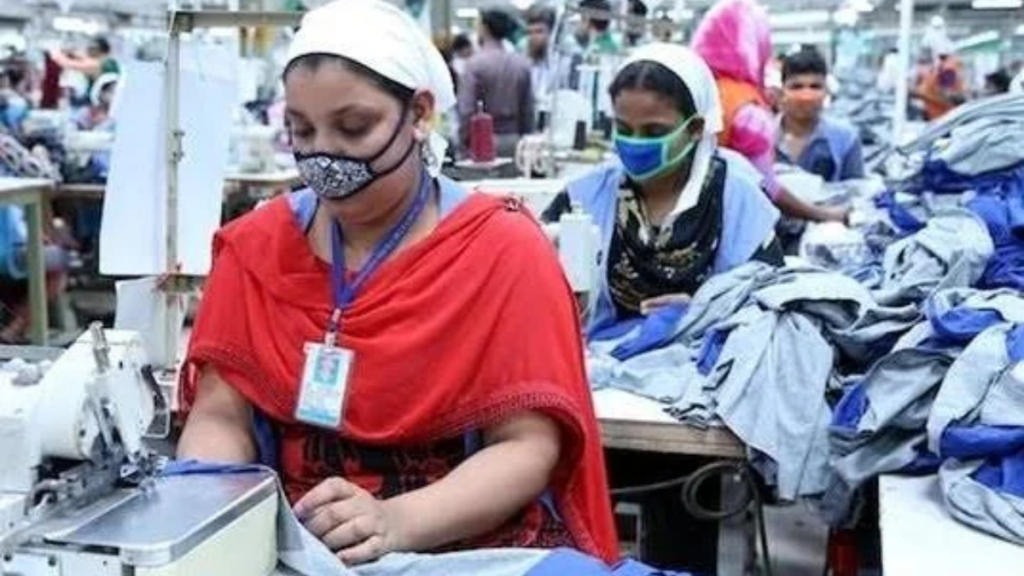
Following nearly 12 hours of marathon negotiations, a government-appointed wage board approved a 36% minimum monthly wage increase for Bangladesh’s ready-made garment workers. The landmark decision bumped base entry-level salaries up from 12,500 Taka to 17,000 Taka ($139). The historic shift aims to stabilize operations across the world’s second-largest apparel-exporting nation after weeks of widespread industrial strikes.
The Revised Four-Grade Salary Framework
The six-member industry board officially consolidated the sector’s payment guidelines into a modernized four-grade structure. Under this new implementation framework, workers will be compensated according to distinct manufacturing skill categories:

- Grade 1 (Top Tier Master Craftsmen): BDT 21,500
- Grade 2 (Advanced Machine Operators): Adjusted proportionally between tiers
- Grade 3 (Standard Production Assemblers): Adjusted proportionally between tiers
- Grade 4 (Entry-Level Factory Assistants): BDT 17,000 (representing a flat BDT 4,500
Economic Friction and Global Supply Chains
The late-night 4–2 board vote passed amid intense friction, as labor union leaders initially held lines for an 18,000 Taka baseline to counter climbing food, utility, and housing costs. Though representing the smallest percentage hike of the last decade, labor leaders urged immediate factory returns to clear backlogs before the busy global winter retail rush.
The Bangladesh Garment Manufacturers and Exporters Association (BGMEA) confirmed that recent factory closures caused an estimated $428 million in production disruptions, steering international fashion brands to shift roughly $254 million in immediate purchase orders to competing regional hubs. The new legally binding wage structures will officially take effect on December 1, 2026, with updated pay distributions arriving in worker packets starting January 2027.